
- SHOWCASE
What Does Invisalign Do to Your Teeth? Movement Types (and What It Can’t Fix)
What Does Invisalign Do? Tooth Movement & Limits
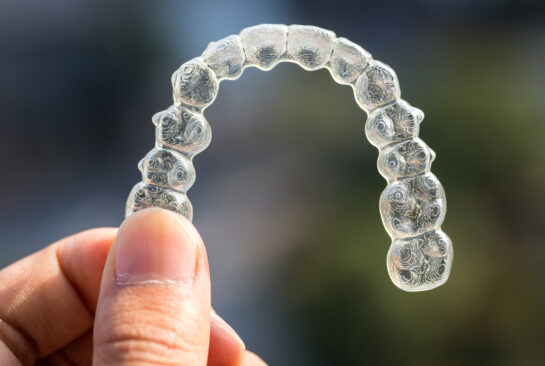
Invisalign is a clear aligner treatment designed to gradually straighten teeth and improve mild to moderate bite issues, without the need for traditional fixed metal braces. It works using a series of custom-made, removable aligners that fit closely over your teeth.
Each aligner applies gentle pressure to specific teeth, helping guide them into better positions over time. This can improve the appearance of your smile, support better oral hygiene, and help create a more balanced bite.
Invisalign is a popular option for adults and teenagers because it is discreet, removable, and convenient. The aligners can be taken out for eating, drinking, brushing, and flossing.
This treatment may be suitable for a range of mild to moderate concerns, including crowding, gaps between the teeth, minor bite problems, and uneven tooth alignment. For the best results, the aligners usually need to be worn for around 20 to 22 hours a day. You will change to a new set of aligners every one to two weeks, depending on the plan set by your dentist or orthodontist.
With consistent wear and regular dental reviews, Invisalign can help create a straighter, healthier-looking smile.
How Invisalign Works
Invisalign works by applying gentle, controlled pressure to specific teeth using a series of clear plastic aligners that are custom-made for your mouth. Each aligner is slightly different from the one before, helping move your teeth step by step towards their planned positions.
Unlike traditional braces, which use brackets and wires, Invisalign aligners fit snugly over your teeth and guide them gradually into place. Each stage of movement is digitally planned in advance, helping your dentist or orthodontist manage the treatment carefully from start to finish.
Principle of Controlled Force
Invisalign works by applying a steady, gentle force over time. This pressure encourages the bone around the teeth to remodel naturally, allowing the teeth to move safely into their new positions.
The aligners are made from a flexible material designed to maintain consistent pressure throughout each stage of treatment. In more complex cases, small tooth-coloured attachments may be placed on certain teeth. These attachments help the aligners grip the teeth more effectively and improve the accuracy of certain movements.
Sequential Aligner Changes
Invisalign gradually moves your teeth through a planned series of clear aligners. Each aligner is usually worn for one to two weeks before moving on to the next set.
Wearing the aligners consistently for 20 to 22 hours a day is important. If they are not worn as advised, treatment may take longer or the final result may be less predictable.
Types of Movements Invisalign Can Achieve
Invisalign can correct a wide range of common orthodontic concerns, especially mild to moderate alignment problems. By carefully planning each stage of movement, the aligners can gradually shift teeth into healthier and more balanced positions.
While Invisalign can achieve many of the same results as braces in suitable cases, some movements are more predictable than others. In general, clear aligners work best for controlled, gradual adjustments rather than large or highly complex tooth movements.
Minor to Moderate Adjustments
Invisalign can be very effective for patients with mild to moderate cosmetic or orthodontic concerns. Small tooth movements often respond well to clear aligner treatment and can produce noticeable improvements.
Common issues that may be treated with Invisalign include:
- Small gaps between the teeth.
- Mild crowding or overlapping.
- Slightly crooked front teeth.
- Minor bite issues.
- Teeth that are tipped or rotated.
- Uneven tooth positioning along the smile line.
Because the movements happen gradually, many patients find Invisalign more comfortable than they expected. In some cases, your dentist may also recommend small adjustments between the teeth, known as interproximal reduction or IPR, to create extra space and support a better result.
Rotation and Vertical Movement
Invisalign can also help correct rotated teeth, although some movements are more complex than others. Mild rotations may respond well to aligners alone, while more difficult cases may need attachments to provide extra grip and control.
Teeth such as canines and premolars can be harder to rotate because of their shape. In these cases, treatment may take longer or require refinement aligners to help achieve the desired result.
Vertical movements, such as moving a tooth slightly higher or lower, may also be possible with Invisalign, but they are generally less predictable than simple straightening movements. Features such as bite ramps, attachments, or elastics may be needed to improve control during treatment.
With careful planning and good patient cooperation, Invisalign can achieve impressive improvements in tooth position and alignment. However, more severe or complex cases may still be better suited to fixed braces.
The Limits of Invisalign
Although Invisalign is highly effective for many patients, it is not the right solution for every orthodontic case. Some bite problems and tooth movements require stronger forces or greater control than aligners can provide.
Understanding these limitations helps patients have realistic expectations and choose the most suitable treatment for their needs.
Severe Malocclusions
Invisalign can successfully treat many mild to moderate bite issues, including some overbites, underbites, and crossbites. However, more severe jaw or bite problems may be better treated with fixed braces or other orthodontic approaches.
For patients with a significant skeletal imbalance, where the upper or lower jaw sits too far forward or backward, fixed appliances or jaw surgery may sometimes be needed to achieve a stable, long-term result.
In some complex cases, Invisalign may still be used as part of a wider treatment plan.
Teeth Shape and Position Constraints
The shape and position of the teeth can also affect how well Invisalign works. Teeth that are very short, rounded, or unusually shaped can make it harder for the aligners to grip properly and apply the necessary force.
Severely rotated teeth can also be difficult to correct with aligners alone, especially when larger movements are required. Teeth that need significant vertical repositioning may also respond better to fixed braces.
Other situations that may limit Invisalign treatment include:
- Large gaps between the teeth.
- Multiple missing teeth.
- Significant tooth movement requirements.
- Complex bite issues.
- Advanced orthodontic relapse.
In these cases, your dentist or orthodontist may recommend an alternative treatment or a combined approach to achieve the best outcome.
Balancing Expectations with Reality
Invisalign can deliver excellent results for many patients, especially those with mild to moderate alignment concerns who want a discreet alternative to traditional braces. It offers a convenient way to improve the appearance of your smile while also supporting better oral health and function.
However, like any orthodontic treatment, Invisalign has its limits. More complex bite issues or severe tooth movements may require additional techniques or a different treatment option.
The best way to find out whether Invisalign is suitable for you is to book a professional consultation. Your dentist or orthodontist can assess your teeth, discuss your goals, and recommend the most appropriate treatment plan for your smile.